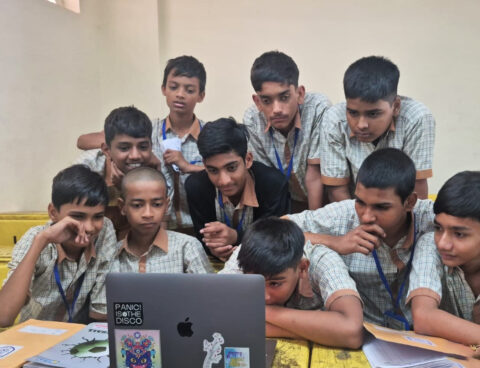
Rachana Sansad College of Applied Art and Craft proudly initiated “School Connect”, a meaningful outreach program designed to spread awareness about Applied Art as a field of education and the diverse career opportunities it offers. This initiative reflects the institution’s long-standing commitment to inclusive education and social responsibility.
The primary focus of School Connect was on students from BMC schools, especially those who are less privileged and often lack access to career guidance in creative fields. Many talented students remain unaware of applied art as a professional pathway—this program aimed to bridge that gap by introducing them to the world of visual communication, design, illustration, advertising, animation, and allied creative professions.

As part of the initiative, faculty members along with students of Rachana Sansad College of Applied Art and Craft visited various schools, engaging directly with young learners through interactive sessions, visual presentations, and real-life examples of applied art practices. These sessions helped students understand how creativity can be transformed into a structured education and a sustainable career.
The program emphasized that applied art is not limited to drawing or painting, but is a dynamic field that blends creativity, technology, problem-solving, and communication, opening doors to careers in advertising agencies, design studios, media houses, film and digital platforms, and independent practice.
School Connect was successfully conducted in collaboration with Salaam Bombay, whose support strengthened the outreach and impact of the initiative. This collaboration helped connect with schools more effectively and reinforced the shared vision of empowering youth through education and awareness.
Through School Connect, Rachana Sansad College of Applied Art and Craft reaffirmed its mission to nurture creative potential beyond classroom walls, inspire confidence among young minds, and encourage students to dream bigger—regardless of their socio-economic background.
This initiative stands as a step towards building a more inclusive, informed, and creatively empowered future generation.
Rachana Sansad College of Applied Art and Craft proudly initiated “School Connect”, a meaningful outreach program designed to spread awareness about Applied Art as a field of education and the diverse career opportunities it offers. This initiative reflects the institution’s long-standing commitment to inclusive education and social responsibility.
The primary focus of School Connect was on students from BMC schools, especially those who are less privileged and often lack access to career guidance in creative fields. Many talented students remain unaware of applied art as a professional pathway—this program aimed to bridge that gap by introducing them to the world of visual communication, design, illustration, advertising, animation, and allied creative professions.

As part of the initiative, faculty members along with students of Rachana Sansad College of Applied Art and Craft visited various schools, engaging directly with young learners through interactive sessions, visual presentations, and real-life examples of applied art practices. These sessions helped students understand how creativity can be transformed into a structured education and a sustainable career.
The program emphasized that applied art is not limited to drawing or painting, but is a dynamic field that blends creativity, technology, problem-solving, and communication, opening doors to careers in advertising agencies, design studios, media houses, film and digital platforms, and independent practice.
School Connect was successfully conducted in collaboration with Salaam Bombay, whose support strengthened the outreach and impact of the initiative. This collaboration helped connect with schools more effectively and reinforced the shared vision of empowering youth through education and awareness.
Through School Connect, Rachana Sansad College of Applied Art and Craft reaffirmed its mission to nurture creative potential beyond classroom walls, inspire confidence among young minds, and encourage students to dream bigger—regardless of their socio-economic background.
This initiative stands as a step towards building a more inclusive, informed, and creatively empowered future generation